Balancing Positive and Negative Shapes in Mini Studies
Understanding figure and ground at thumbnail scale
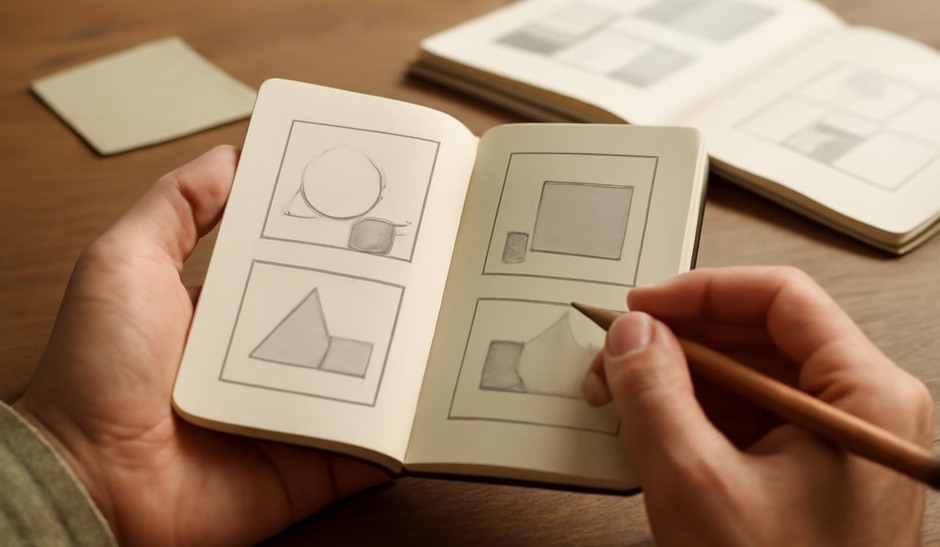
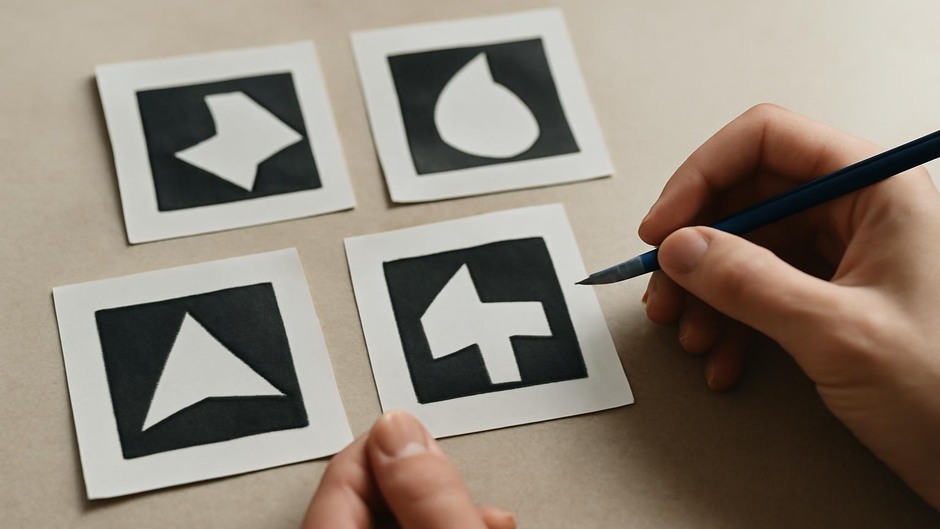
Positive shapes are the forms we call figures; negative shapes are the spaces around and between them. In thumbnails, the interaction of these two kinds of shapes determines how easily the viewer reads an image. Small studies are ideally suited to testing whether a composition has a clear figure-ground relationship or whether shapes compete for attention.
A clear, repeatable routine
Work with a 3 x 5 or 4 x 6 thumbnail. Use a single dark value and the white of the paper. The routine below has three variations that explore balance and clarity.
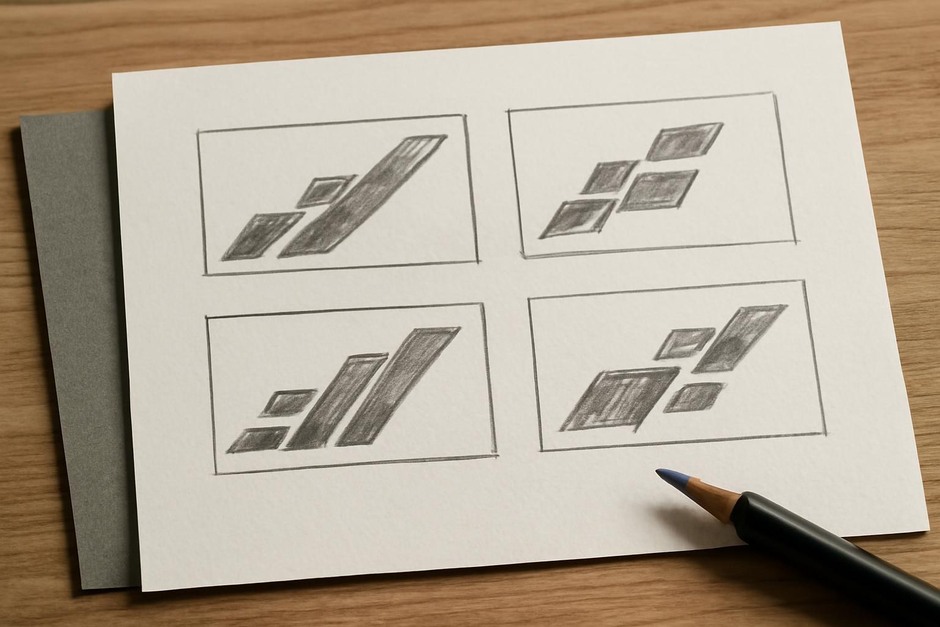
- Baseline: draw a prominent positive shape occupying about a third of the thumbnail. Add two smaller positive shapes in the opposite half. Judge how the white space responds—does it form interesting counter-shapes?
- Inversion: reverse values so the baseline positive shapes become white and the background becomes dark. Note which version reads more decidedly—the filled figure or the void.
- Swap and shift: move one positive shape closer to another, then redraw the thumbnail with those two shapes touching. Observe how touching changes both figure grouping and negative shapes.
Concrete example: start with a dark oval on the left, a small dark square on the lower right, and a narrow dark bar near the top. Inversion will show whether the white space between oval and square becomes a recognizable shape; touching the bar to the oval may create a larger combined figure that reorganizes the composition.
Small adjustments that make a difference
Try these subtle changes and compare results:
- Rotate the main shape by 45 degrees to test whether diagonal orientation clarifies separation from the background.
- Increase the gap between two positive shapes to see if the negative space becomes a focal area.
- Introduce a thin connecting line to test whether it unites shapes or distracts from the primary figure.
Observation: Often a composition that seems busy at full size becomes resolved when the negative shapes are read as intentional forms. Conversely, what appears balanced as isolated pieces may collapse into visual confusion when you change a single adjacency.
Using mirror tests
Reproduce a thumbnail and flip the values: dark to light and light to dark. Which version has a stronger central form? If flipping values improves clarity, consider whether the same switch might help a larger study. Mirror tests are a fast way to see whether the eye prefers a solid figure or a strong void.
When to accept ambiguity
Some compositions benefit from ambiguous figure-ground relationships; they invite longer viewing. The thumbnail stage helps you decide whether that ambiguity is purposeful. If you want a quick read, aim for a dominant positive or a strong negative that reads as a silhouette. If you seek lingering interest, let multiple shapes hold attention by staying near equal value and size.
These small studies build sensitivity to how positive and negative shapes interact. Repeating the routine with different motifs trains the eye to notice subtle adjustments that yield clearer compositions.