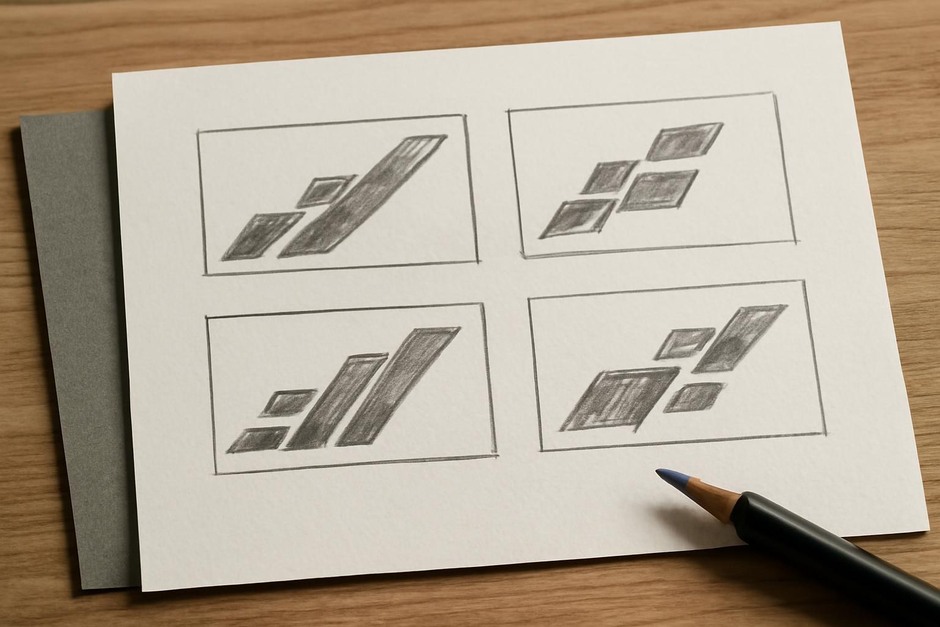
Diagonal Tension: Small Thumbnails That Create Dynamic Direction
The compositional role of diagonals
Diagonals suggest motion and tension because they contrast with the stability of horizontal and vertical formats. In thumbnail work, a diagonal need not be literal; it can be formed by the alignment of several shapes or by a sequence of values. Small exercises that explore diagonal relationships help you decide where energy in a composition should go.
A three-part thumbnail routine
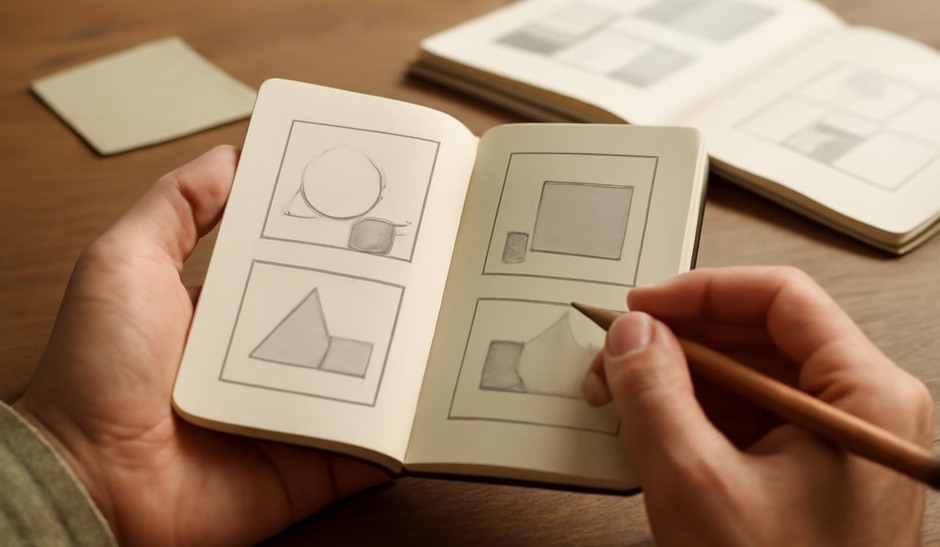
Use a vertical or horizontal thumbnail and try a set of three focused sketches that introduce, intensify, and resolve diagonal motion.
- Introduce: place a single diagonal bar crossing the thumbnail from lower-left to upper-right. Add a small anchor shape opposite the bar’s entry point. Observe how the eye travels along the bar to the anchor.
- Intensify: create three short rectangular blocks offset along an implied diagonal. Make the leading block the darkest and the trailing block the lightest to emphasize directionality.
- Resolve: add a counter-diagonal—an opposing short bar or cluster of circles. See how the counter-diagonal arrests or redirects the motion initiated by the primary diagonal.
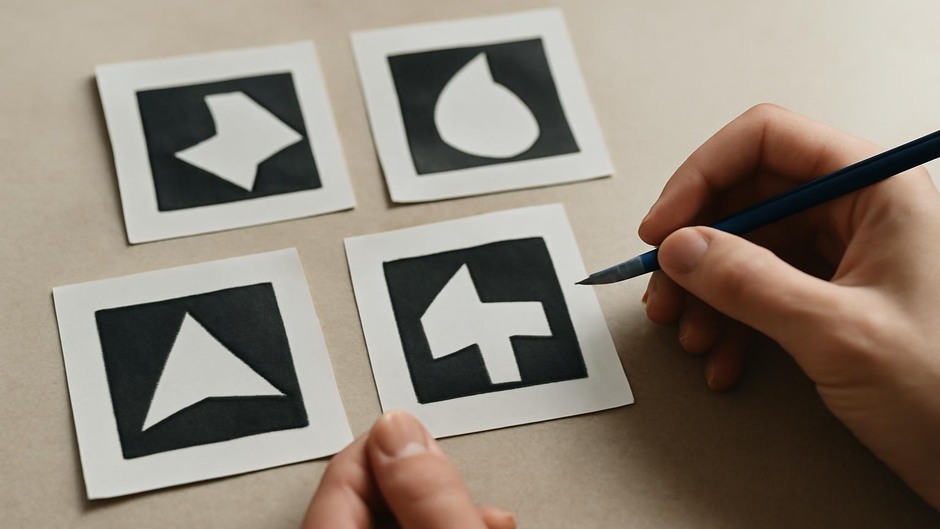
Concrete example: in the first thumbnail, a slanted dark strip suggests momentum; in the second, staggered dark rectangles accelerate that suggestion; in the third, a diagonal cluster of light circles counters the momentum and creates a point of rest.
Tension without chaos
Diagonal compositions can easily feel busy. Keep these guidelines in mind:
- Limit the number of competing diagonals. Two well-placed diagonals often suffice—one to direct and one to moderate.
- Vary value and scale deliberately. A thin, dark diagonal reads differently from a broad, light one; mix these to balance energy.
- Use negative space as a directional tool. The shape of the voids between diagonals can reinforce or soften motion.
Small variations, large effects
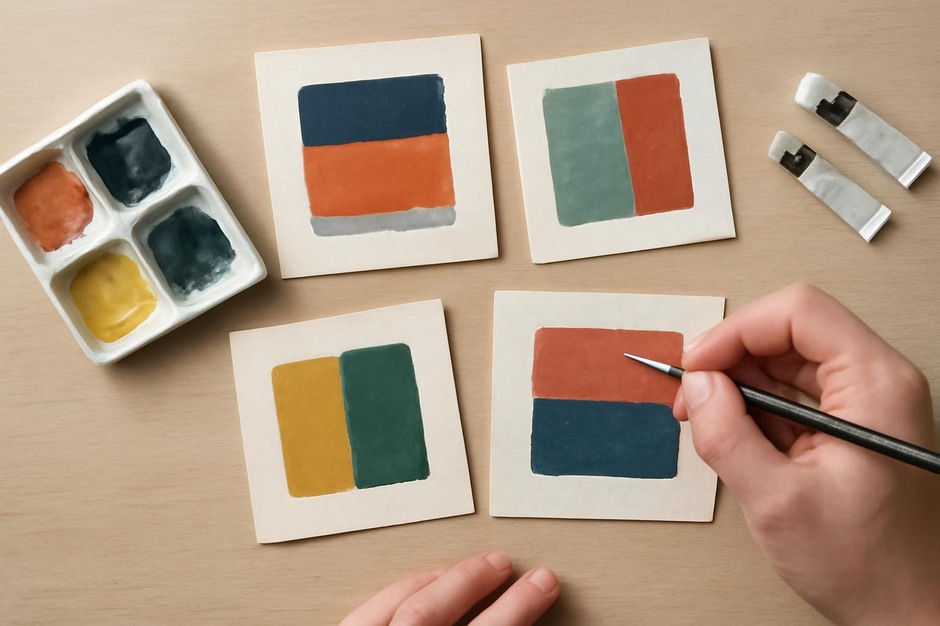
Run a quick series where you change only one variable: angle, gap, or contrast. For instance, keep the offset blocks identical but rotate their entire group by five degrees between thumbnails. Note how small angle shifts alter perceived speed. Similarly, try making the lead block larger while keeping values constant; size change will produce a sense of acceleration.
Practical application
These thumbnail tests are useful when you want to suggest movement—flowing water, a group moving across a scene, or an implied diagonal of light. They also help when you need to introduce visual stress in a narrative image. At a small scale, you can try many versions and keep the strongest diagonal relationships for larger studies.
Diagonal tension is a compositional tool that rewards deliberate restraint. The thumbnail exercises above offer a fast way to discover whether a dynamic direction supports the idea or overwhelms it.