Gesture and Mark-Making Thumbnails for Visual Rhythm
Gesture as a compositional primer
Gesture and mark-making are ways of recording an impression quickly. In thumbnail form they emphasize flow, weight, and rhythm rather than precise depiction. These small, rapid sketches make spatial decisions that often guide successful larger works; they also encourage expressive freedom within compositional limits.
Quick warm-up routine
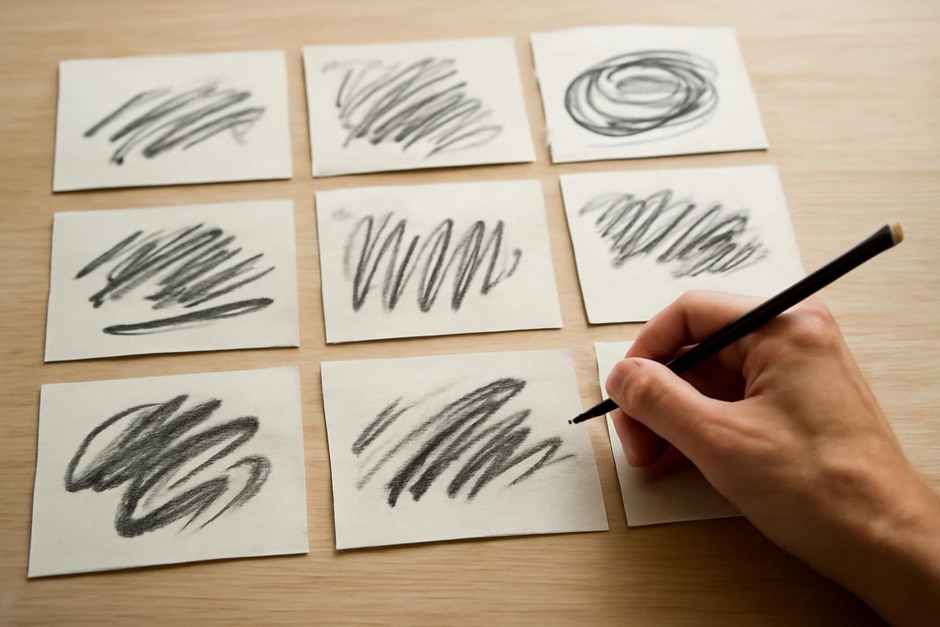
Set a timer for one minute per thumbnail and do five to ten thumbnails in a session. Use a broad pen, a thick pencil, or a brush marker so marks read clearly at thumbnail size. Try these focused prompts:
- Flow line: draw a dominant curved gesture across the thumbnail and build a few supporting marks that echo its curve.
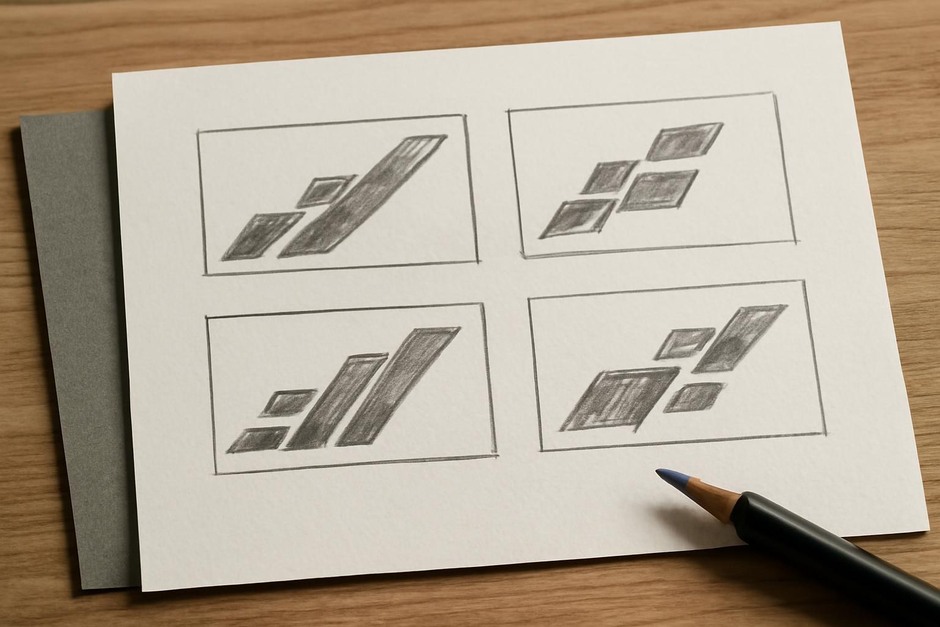
- Weight contrast: make one heavy, saturated stroke and several lighter strokes that counterbalance it.
- Interruptions: draw a flowing line and intentionally interrupt it with a sharp, angular mark to test where the eye stops.
Observation: The immediacy of one-minute thumbnails highlights whether the marks create a convincing rhythm or merely noise. The best thumbnails will show an economy of mark-making where each stroke contributes to the whole.
Mark vocabulary and repetition
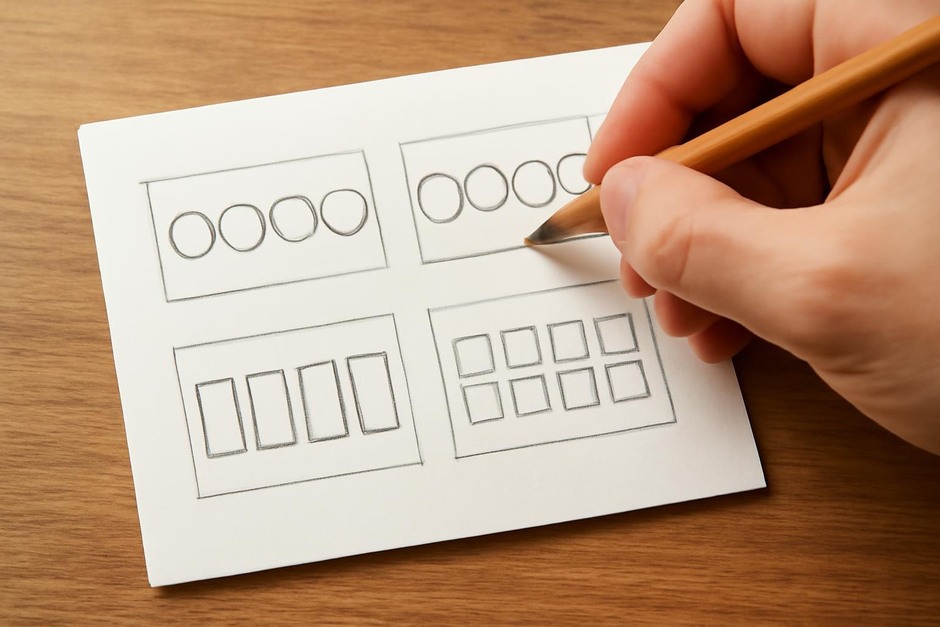
Develop a short vocabulary of marks you like: short dashes, sweeping arcs, clustered dots, and so on. In a series of thumbnails, use the same limited vocabulary and vary only spacing, weight, or orientation. This constraint reveals how rhythm emerges from repeated gestures rather than isolated details.
Integrating gesture with shape
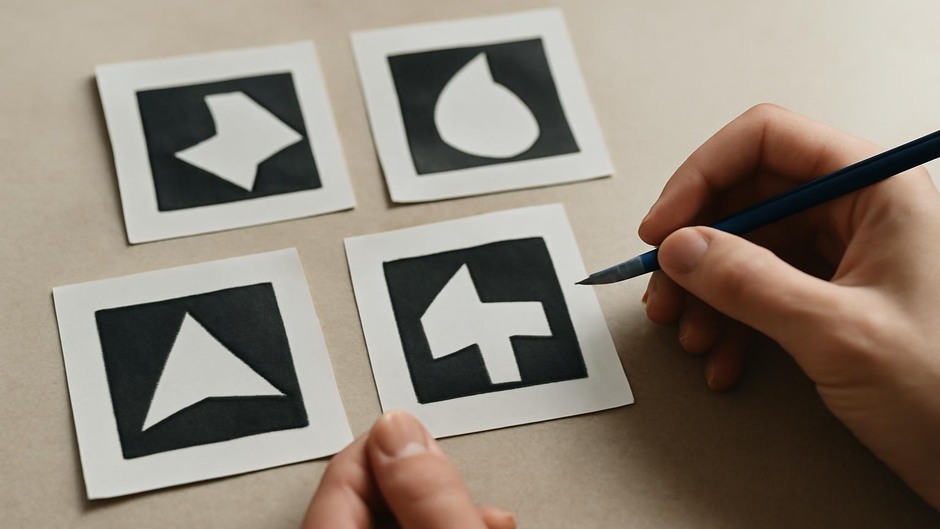
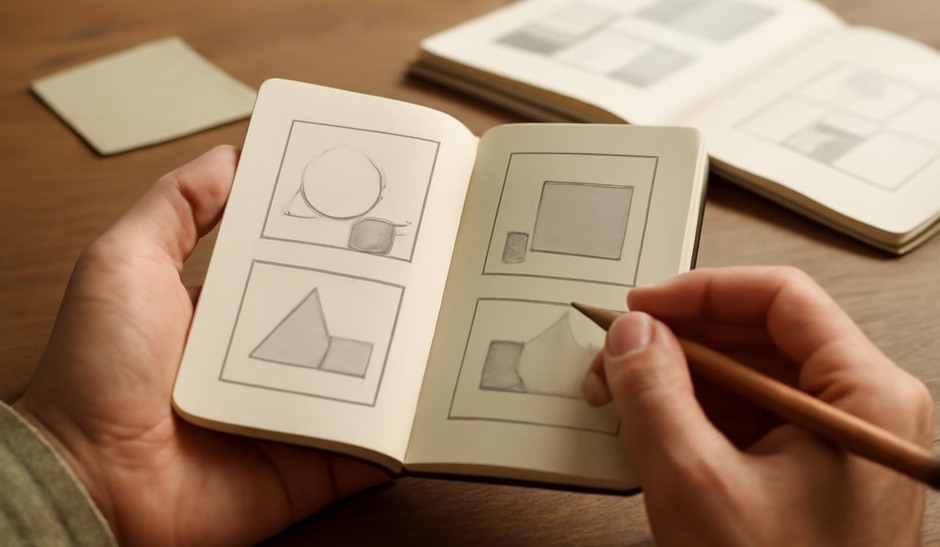
Combine a clear silhouette with gestural marks inside or around it. For example, draw a large dark shape as your anchor, then add loose sweeping strokes inside to suggest texture or movement. The contrast between the stable outer form and the active inner marks creates a layered rhythm that balances calm and motion.
Practical reflection
After a session, choose three thumbnails that feel most convincing and describe why: is it the weight distribution, the continuity of the gesture, or the way interruptions create interest? Repeating the session with slight variations trains you to recognize and reproduce those successful features.
Gesture thumbnails are an efficient way to discover a compositional pulse. They encourage confidence in bold decisions and help you prioritize flow and rhythm before worrying about refinement.